
Guide
Best Water Temperature for Coffee: A Simple Guide by Roast Level
Learn the best water temperature for coffee by roast level. Get simple starting points for light, medium, and dark roasts, plus how temperature affects taste.
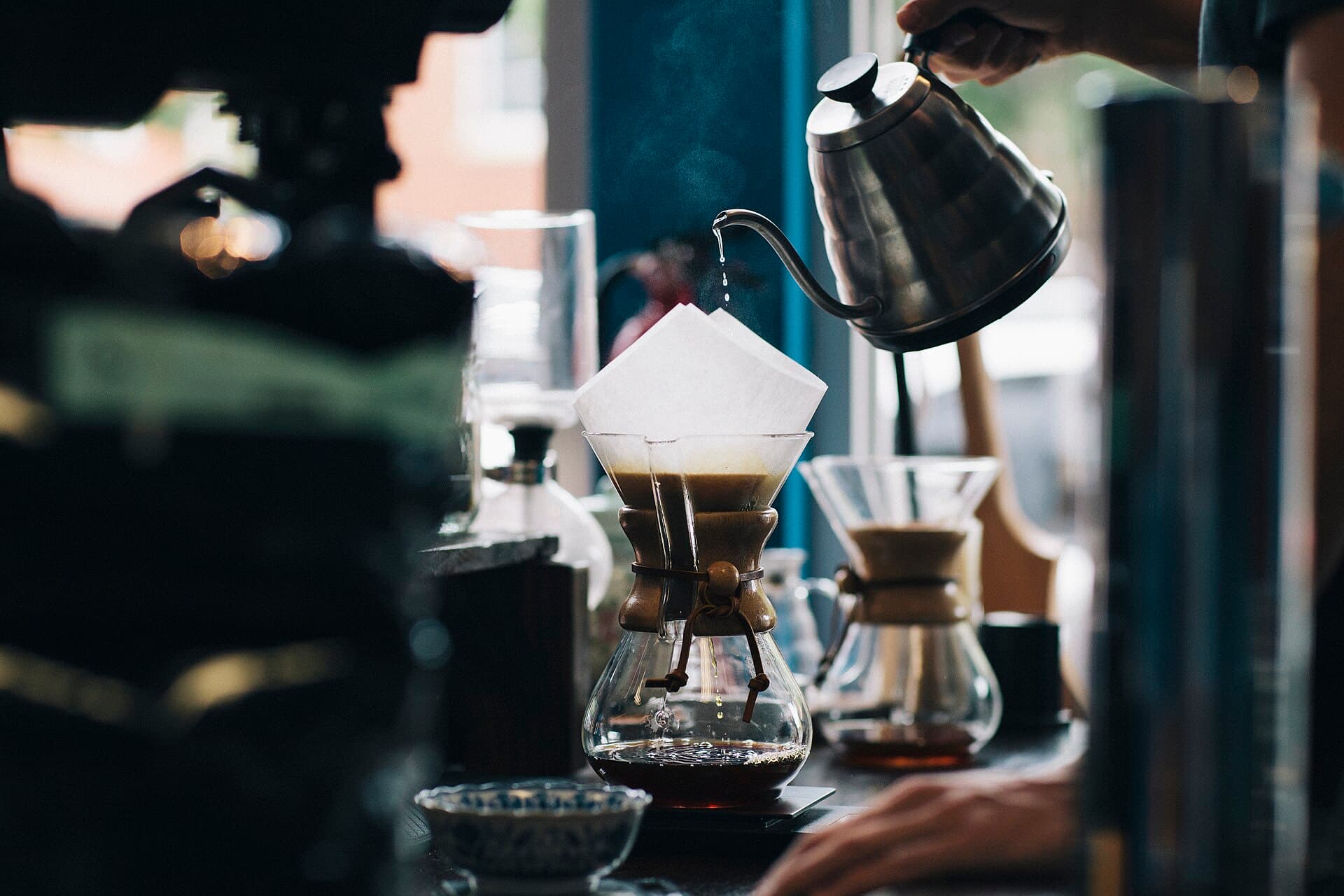
Water temperature is one of the easiest brewing variables to control, and one of the most overlooked. Get it in a sensible range and your coffee tends to taste clearer and more balanced. This guide explains how temperature affects extraction and gives you a practical starting point based on your roast level.
Quick Answer: Best Water Temperature for Coffee
For most hot coffee brewing, a good starting range is 195 to 205°F / 90 to 96°C. Some light roasts can work well a little hotter, around 205 to 208°F / 96 to 98°C, especially in manual pour over where the water cools as you pour.
A simple way to choose within that range:
- Light roasts: around 205 to 208°F / 96 to 98°C
- Medium roasts: around 200 to 205°F / 93 to 96°C
- Dark roasts: around 195 to 200°F / 90 to 93°C
These are starting points, not rules. Taste your coffee and adjust. If you do not have a temperature-controlled kettle, bring the water to a boil, turn off the heat, and let it rest for roughly 30 to 60 seconds before pouring. The exact temperature will vary with the kettle, water volume, and room temperature, but this usually gets you into a practical hot-brewing range.
Why Water Temperature Matters
Extraction is the process of dissolving flavor compounds out of ground coffee and into water. Temperature changes how quickly that happens.
- Hotter water usually extracts faster. It pulls more out of the grounds in the same amount of time.
- Cooler water usually extracts more slowly. It pulls less out in the same amount of time.
That speed matters because different coffees give up their flavors at different rates.
- Light roasts are denser and less soluble. They often benefit from hotter water that can extract them more fully.
- Dark roasts are more porous and more soluble. They give up flavor easily, so slightly cooler water can keep them from extracting too fast and turning harsh.
Temperature is powerful, but it is not the only lever. Grind size, brew time, coffee-to-water ratio, and agitation all shift extraction too. Think of temperature as one dial among several.
Water Temperature Chart by Roast Level
| Roast Level | Starting Temperature | Why It Works | Adjust Hotter If | Adjust Cooler If |
|---|---|---|---|---|
| Light | 205 to 208°F / 96 to 98°C | Dense, less soluble beans extract more fully with more heat | Coffee tastes sour, sharp, or thin | Coffee tastes harsh or overly drying |
| Medium | 200 to 205°F / 93 to 96°C | Balanced solubility works across a flexible middle range | Coffee tastes flat or underdeveloped | Coffee tastes bitter or hollow |
| Dark | 195 to 200°F / 90 to 93°C | More soluble beans extract quickly, so less heat keeps balance | Coffee tastes weak or muddy | Coffee tastes burnt, bitter, or ashy |
Not sure where your coffee sits on the scale? Beanie's roast levels guide can help you read the bag.
Temperature for Light Roast Coffee
Starting point: around 205 to 208°F / 96 to 98°C.
Light roasts are roasted for less time, which leaves the beans denser and harder to extract. Hotter water helps unlock their brighter, more delicate flavors. If light-roast coffee tastes sour, sharp, or watery, the water may be too cool or the extraction too short. Try a hotter temperature, a finer grind, or a longer brew time.
Temperature for Medium Roast Coffee
Starting point: around 200 to 205°F / 93 to 96°C.
Medium roasts sit in a forgiving middle zone. They are usually easier to brew well than the extremes, so this is a comfortable place to start if you are still learning your setup. If the cup tastes flat, nudge the temperature up. If it tastes a little bitter, ease it down.
Temperature for Dark Roast Coffee
Starting point: around 195 to 200°F / 90 to 93°C.
Dark roasts are more porous and dissolve quickly. Very hot water can push dark roasts toward harsher, more bitter, or more roasty flavors, especially if the grind is fine or the brew time is long. Slightly cooler water slows things down and tends to keep the cup smoother. If a dark roast tastes burnt or aggressive, cool the water a few degrees before changing anything else.
How Temperature Affects Sourness and Bitterness
Most "off" flavors in coffee come from extracting too little or too much. Temperature is one of the things that pushes you in either direction.
Under-extraction happens when too little flavor is dissolved. It can taste:
- Sour
- Sharp
- Salty
- Thin or weak
Over-extraction happens when too much flavor is dissolved. It can taste:
- Bitter
- Harsh
- Dry or astringent
- Hollow
Balanced coffee sits between those edges. It tends to taste:
- Sweet
- Clear
- Complex
- Pleasant and easy to drink
A rough guide: if the cup leans sour or thin, more extraction may help, and hotter water is one way to get there. If it leans bitter or harsh, less extraction may help, and cooler water is one way to ease off. Learning to name what you taste makes these adjustments much easier, and Beanie's coffee tasting notes guide is a good place to build that vocabulary.
How Temperature Works With Grind Size and Brew Time
Temperature rarely acts alone. Three other variables shift extraction in similar ways, and they can stand in for each other.
- Grind size: Finer grinds expose more surface area and extract faster. Coarser grinds extract slower.
- Brew time: Longer contact between water and grounds usually increases extraction. Shorter contact decreases it.
- Agitation: Stirring or a turbulent, forceful pour speeds extraction. A gentle, even pour slows it.
Because these overlap, you do not have to fix everything with temperature. If a coffee tastes sour, you could raise the temperature, or grind a little finer, or brew a little longer. Change one variable at a time so you can tell what actually made the difference.
A practical habit: lock in your grind, ratio, and brew method first, then use temperature as a fine-tuning dial once everything else is consistent.
Water Quality: Why Filtered Water Can Help
Coffee is mostly water, so the water you use matters as much as its temperature.
- A basic carbon filter can help if your tap water tastes or smells chlorinated, though it will not necessarily fix very hard, very soft, or highly alkaline water.
- Balanced mineral content helps extraction. Water that is too soft or too hard can mute flavors or make the cup taste off.
- Avoid distilled or zero-mineral water for brewing, since some minerals actually help carry flavor.
You do not need a lab. If your tap water tastes or smells chlorinated, a basic carbon filter or filter pitcher can be a meaningful upgrade.
Common Mistakes
- Treating temperature numbers as exact rules. Ranges are starting points. Your beans, kettle, and taste matter more than hitting a precise degree.
- Pouring straight off a rolling boil for dark roasts. Boiling water (212°F / 100°C) often pushes dark and medium roasts toward bitterness. Let it rest briefly.
- Changing everything at once. Adjust one variable at a time so you can learn what each change does.
- Ignoring grind size. If the cup is off, grind is often the real culprit, not temperature.
- Using poor water. Even perfect temperature cannot fix heavily chlorinated or imbalanced water.
- Not keeping notes. Without a record, it is hard to repeat a great cup or learn from a bad one. A tool like Beanie lets you log brew temperature alongside your tasting results, so you can spot patterns and dial in your favorite coffees over time.
Frequently Asked Questions
What is the best water temperature for pour over coffee?
A common starting range is 195 to 205°F (90 to 96°C), adjusted by roast level. Lighter roasts sit at the higher end, darker roasts at the lower end. Taste and adjust from there.
Should I use boiling water for coffee?
Not always. Boiling water is not automatically wrong, especially for light roasts and manual brews where the water cools while you pour. But for medium-dark and dark roasts, water straight off a boil can make the cup taste harsher, more bitter, or more roasty. Letting it cool briefly is a safer starting point.
What temperature is best for light roast coffee?
Around 205 to 208°F / 96 to 98°C is a good starting point. Light roasts are dense and benefit from hotter water that extracts them more fully.
What temperature is best for dark roast coffee?
Around 195 to 200°F / 90 to 93°C is a good starting point. Dark roasts dissolve quickly, so slightly cooler water helps keep the cup from turning harsh.
Do I need a temperature-controlled kettle?
It helps with consistency, but it is not required. Boiling water and letting it rest briefly gets many brewers close enough to start. A thermometer is a low-cost alternative.
Why does my coffee taste sour even at the right temperature?
Sourness usually points to under-extraction. Beyond temperature, try a finer grind, a longer brew time, a little more agitation, or slightly more water per gram of coffee, changing one thing at a time.
Does water temperature matter for cold brew?
Cold brew relies much more on long contact time than on heat, so temperature matters differently: fridge-temperature cold brew extracts more slowly than room-temperature cold brew. This guide focuses on hot brewing methods like pour over and drip.