
Guide
Whole Bean vs Ground Coffee: What's the Difference?
Whole bean vs ground coffee comes down to freshness versus convenience. Learn the real differences and how to choose the right option for how you brew.
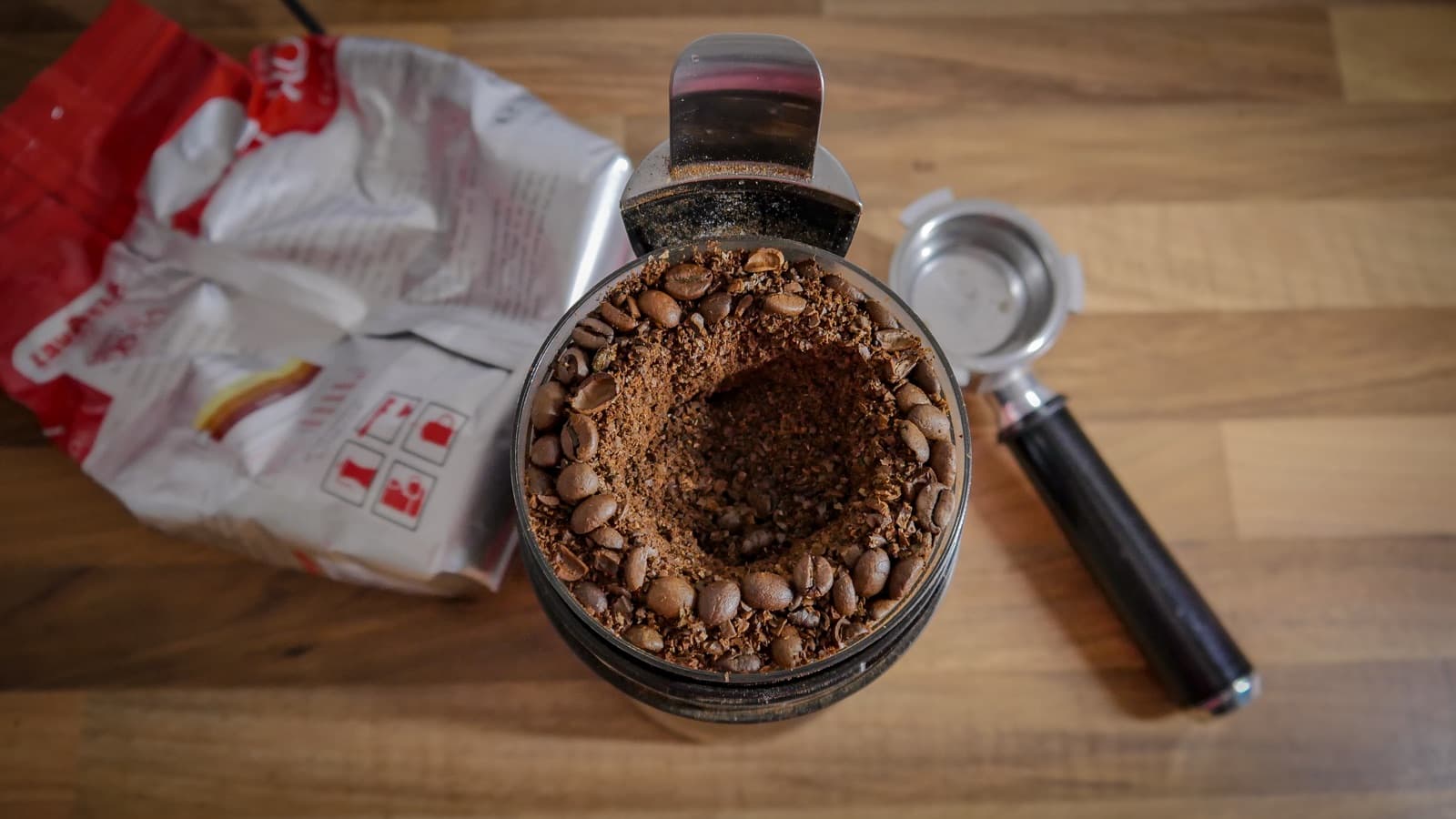
Whole bean and ground coffee are the same product at different stages: one is ground at home right before brewing, the other is ground before you buy it. The main trade-off comes down to freshness versus convenience, and the right choice depends on your routine, your equipment, and how you brew. This guide breaks down the real differences so you can decide what actually makes sense for you.
What Whole Bean and Ground Coffee Mean
Whole bean coffee is roasted coffee sold as intact beans. You grind it yourself, usually just before brewing.
Ground coffee (also called pre-ground) is coffee that has been ground before purchase and then packaged. While the package stays sealed, vacuum packing, nitrogen flushing, and other oxygen-limiting methods can slow staling considerably. Once the package is opened, ground coffee generally loses freshness faster than whole beans.
Neither is a different type of coffee. When both come from the same roasted coffee, the fundamental difference is when the coffee was ground, and that single detail affects how your cup tastes.
The Core Difference: Freshness and Surface Area
The moment coffee is ground, it changes.
An intact coffee bean has relatively little surface area exposed to the air. Grinding creates many smaller particles, which dramatically increases the exposed surface area and shortens the pathways that gases and aroma compounds travel to escape. That exposure speeds up three things:
- Oxidation. More surface contact with oxygen means flavors fade faster.
- Loss of aromatics. Coffee's delicate aromatic compounds are volatile and escape quickly once ground.
- Release of carbon dioxide. Roasted coffee holds CO2 that gasses off over time. Grinding accelerates this.
In practice, ground coffee begins losing aromatic compounds immediately after grinding and changes considerably faster than whole beans, particularly once it is exposed to air. How quickly the difference becomes noticeable depends on the coffee, the packaging, the temperature, and how it is stored. Whole beans hold onto their character longer because far less of the coffee is exposed to air.
This is the single most important fact in the whole bean versus ground debate. Everything else is about whether that freshness difference is worth the effort for you.
Whole Bean vs Ground Coffee: Side by Side
| Factor | Whole Bean | Ground Coffee |
|---|---|---|
| Freshness | Generally retains freshness longer after opening | Loses aroma more quickly after opening |
| Convenience | Extra step every brew | Ready to brew instantly |
| Consistency | Depends on your grinder | Often commercially consistent |
| Equipment needed | Requires a grinder | None |
| Brewing flexibility | Grind to match any method | Fixed to one grind size |
| Upfront cost | Higher (grinder needed) | Lower |
| Flavor potential | Greater potential for freshly ground flavor | Good, but limited by grind timing |
Five Factors to Compare
1. Freshness
Whole bean generally has the advantage here.
- As a practical guideline, whole beans are often at their most expressive within several weeks of roasting.
- Once opened, ground coffee generally changes more quickly and is best used relatively soon, often within one or two weeks.
- Grinding right before brewing captures aromas that would otherwise fade.
These are guidelines rather than expiration dates. Actual freshness depends on roast level, packaging, oxygen exposure, temperature, moisture, and how often the bag is opened. If flavor is your top priority, whole bean gives you more to work with.
2. Convenience
Ground coffee wins here.
- No grinder to buy, clean, or make room for.
- No extra step in the morning.
- No grinder noise, which matters in shared or quiet spaces.
For busy mornings, travel, offices, or anyone who wants coffee with zero fuss, pre-ground is a reasonable and practical choice.
3. Consistency
This one is less obvious than people expect.
- Commercially ground coffee can be very consistent because it is produced with professional equipment.
- Grinding at home gives you more control and lets you brew immediately after grinding, but the result depends heavily on the grinder. A capable burr grinder offers much more control than a blade grinder, which produces a less controlled mixture of particle sizes and can make extraction less even.
So whole bean gives you a higher ceiling for freshness and adjustability, but not automatically for uniformity. Without a decent grinder, pre-ground may actually be the more even of the two.
4. Equipment
- Whole bean requires a grinder, which is an added cost and takes counter space.
- Ground coffee requires nothing beyond your brewer.
A burr grinder is the recommended type for whole bean because it lets you select a target grind range and generally produces a more controlled particle-size distribution than a blade grinder, which produces a less controlled range of particle sizes. No grinder produces particles of exactly one size, but burr grinders give you far more control. Blade grinders are cheaper but harder to dial in.
5. Brewing Method
Different brewing methods typically use different grind sizes, and whole bean lets you match the grind to the method. Treat these as starting points, since the ideal grind also shifts with the brewer, coffee, dose, and recipe.
- Espresso typically uses a fine grind, though some modern recipes go somewhat coarser.
- Pour over commonly uses a medium-fine to medium grind.
- Automatic drip usually starts around medium.
- French press commonly uses medium-coarse to coarse grounds.
- Cold brew often uses medium-coarse to coarse grounds, mainly for easier filtering during a long steep. Finer grinding increases extraction and can work with adjusted brewing times, so it is a convention rather than a strict rule.
Many general-purpose pre-ground coffees are sold at a medium grind intended for automatic drip machines, although method-specific options are also available. If you use several brewing methods, whole bean gives you the flexibility to grind for each one. If you only ever use one method, that flexibility matters less.
Why It Matters
The grind is where a lot of coffee's flavor either survives or slips away. Two people can buy the exact same beans and end up with very different cups depending on how fresh the grind is and how well it suits the brew.
That said, fresh grinding is not the only thing that affects taste. Bean quality, roast level, water, and brewing technique all play a role. A great pre-ground coffee brewed carefully will usually beat a great whole bean coffee brewed poorly. Freshness is one lever, not the whole story.
Which Should You Choose?
There is no universal winner. Match the choice to your situation.
Choose whole bean if you:
- Care most about flavor and aroma.
- Already own or are willing to buy a burr grinder.
- Brew with more than one method.
- Enjoy the process and do not mind an extra step.
Choose ground coffee if you:
- Want speed and simplicity above all.
- Do not want to buy or store a grinder.
- Brew the same way every day.
- Drink through a bag fairly quickly.
A common middle path is to buy whole bean and have it ground at the shop to match your brewer. You lose some freshness, but you often get better beans and a more even grind than a home blade grinder would give you.
If you are trying to figure out which beans are worth grinding fresh, a coffee discovery tool like Beanie can help you find roasters and roast styles that fit your taste before you commit to a bag.
Brewing Tips
Whatever you buy, a few habits protect flavor.
- Store coffee in an airtight container away from light, heat, and moisture.
- If freezing coffee, divide it into airtight portions so you do not repeatedly thaw and reopen the same container. Let each portion reach room temperature while still sealed to reduce condensation on the beans.
- If grinding at home, grind right before brewing rather than in advance.
- Match your grind size to your brewing method for the most balanced cup.
- Use a burr grinder rather than a blade grinder if you can, for a more even grind.
- Buy amounts you will finish within two to four weeks rather than stocking up.
Common Mistakes
- Buying more coffee than you can drink fresh. A big bag that sits open for a month loses much of its appeal, ground or whole.
- Grinding a full week's worth at once. This cancels out most of the benefit of buying whole bean.
- Using a blade grinder and expecting even results. Uneven grounds lead to inconsistent extraction.
- Storing coffee next to the stove or a sunny window. Heat and light speed up staling.
- Ignoring the roast date. Freshness starts from when the coffee was roasted, not when you bought it.
- Using the wrong grind size for the method. Too fine or too coarse can make even good coffee taste bitter or weak.
Frequently Asked Questions
Is whole bean coffee better than ground coffee?
For flavor and freshness, whole bean has the advantage because you grind it just before brewing. But ground coffee is more convenient and can be the smarter choice if you value speed, do not own a grinder, or brew the same way every day.
Does whole bean coffee really taste fresher?
Generally, yes. Whole beans expose far less surface area to air, so they tend to hold their aroma and flavor longer than ground coffee, which changes more quickly once its package is opened. How large the difference is depends on packaging, storage, and how soon you use it.
How long does ground coffee stay fresh?
For the best flavor, ground coffee is generally worth using relatively soon after opening, often within one or two weeks. This is a practical guideline rather than an expiration date, and good packaging and storage can slow the decline. It remains safe to drink well beyond that, but the flavor and aroma steadily fade.
Do I need a grinder for whole bean coffee?
Yes, unless you have it ground at the shop. A burr grinder is recommended because it produces a more even grind than a blade grinder, which affects how balanced your coffee tastes.
Can I use pre-ground coffee for espresso or French press?
Standard pre-ground coffee is usually a medium grind made for drip machines. It will not be ideal for espresso, which typically uses a fine grind, or French press, which typically uses a coarser grind. If you use those methods, whole bean or method-specific pre-ground is a better fit.
Is pre-ground coffee lower quality?
Not necessarily. Plenty of good coffee is sold pre-ground. The main limitation is freshness, not the quality of the beans themselves. A high quality pre-ground coffee, stored well and used quickly, can make an excellent cup.