
Blog
Coffee Varietals 101: The Most Common Coffee Varieties
A coffee varietal is the type of coffee plant the beans came from, the same way Granny Smith and Gala are types of apple. To see which ones you are most likely to meet on a specialty bag, we looked at the varieties listed across more than 24,000 coffees and ranked the most common, with a note on each.
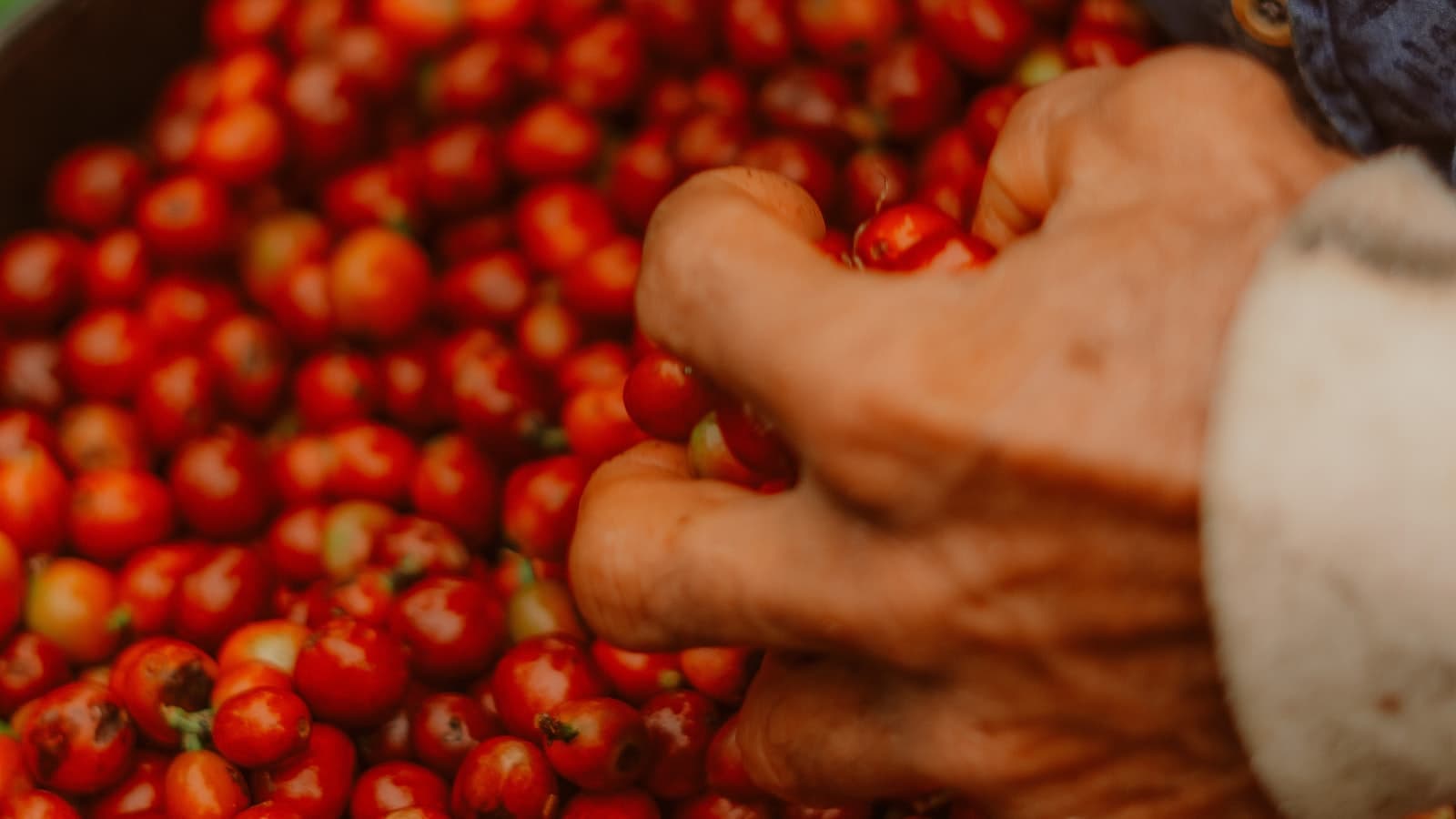
What a Coffee Varietal Is
A varietal (or variety) is a specific type of the coffee plant. The vast majority of specialty coffee comes from one species, Coffea arabica, though specialty Robusta remains a small but growing segment. That species has many varieties, each with its own history, growing habits, and reputation.
You will see the varietal listed on better coffee bags alongside the origin, altitude, and process. It is one more clue about what is in the cup, though as we explain below, it is usually one factor among several, alongside origin, environment, processing, and roasting.
A quick note on wording:
- Varietal and variety are used interchangeably on coffee bags. Purists prefer "variety" for the plant and "varietal" for the coffee made from it, but you will see both everywhere.
- Some labels list a cultivar, which simply means a variety that people selected and propagated on purpose.
How Often Coffees List a Varietal
Of the 24,911 active specialty coffees we analyzed, 9,422 list a varietal. That is fewer than half, so a missing variety on a bag is normal and does not mean the coffee is lower quality.
of 24,911 active specialty coffees name a varietal. Fewer than half, so a blank variety field is completely normal.
When a variety is listed, the same names come up again and again. The percentages below are the share of those 9,422 coffees that name each variety. We split entries on commas and slashes so a bag listing two varieties counts toward both. Varietal names were normalized for common spelling differences (for example, Gesha and Geisha), while distinct varieties such as Red Bourbon and Bourbon were counted separately.
These rankings reflect the coffees in our specialty catalog, not global production. Some varieties appear often because they are commonly listed on specialty bags, while others may be widely grown but rarely disclosed. Read this as what you will see on a specialty shelf.
The Most Common Coffee Varieties
Here are the 15 most common varietals in the catalog, with a short description of each.
The six you'll meet most often
| Rank | Variety | Share of coffees that list one | In one line |
|---|---|---|---|
| 1 | Caturra | 18.9% | A compact Bourbon mutation, very common in Latin America |
| 2 | Bourbon | 15.3% | A heritage variety and parent of many others |
| 3 | Typica | 9.3% | The other great heritage variety, sweet and clean |
| 4 | Gesha | 8.0% | The prestige variety, floral and often pricey |
| 5 | Castillo | 7.3% | A disease-resistant Colombian hybrid |
| 6 | Catuai | 7.2% | A hardy Bourbon and Typica descendant |
| 7 | Heirloom | 4.2% | A catch-all for Ethiopia's many local varieties |
| 8 | Colombia | 4.0% | A disease-resistant hybrid, and an imprecise label |
| 9 | Red Bourbon | 3.8% | A red-cherry Bourbon, prized for sweetness |
| 10 | SL28 | 3.6% | A famous Kenyan selection, bold and juicy |
| 11 | Catimor | 3.4% | A disease-resistant group with Robusta lineage |
| 12 | Pink Bourbon | 3.4% | Pink-cherried and aromatic, with debated genetic origins |
| 13 | Pacamara | 2.0% | A large-beaned cross from Central America |
| 14 | SL34 | 2.0% | A second well-known Kenyan selection |
| 15 | Mundo Novo | 2.0% | A natural Bourbon and Typica cross from Brazil |
The heritage parents: Bourbon and Typica
Many widely planted commercial arabica varieties trace back to two old ones, Bourbon and Typica.
- Typica is one of the original cultivated varieties that spread around the world. It is known for a sweet, clean, classic cup, though it gives low yields and bruises easily.
- Bourbon developed separately and tends to be sweeter and more productive than Typica. It is a parent or grandparent of a long list of modern varieties.
Between them, they are ancestors of many of the varieties on this list. The clearest exceptions are the Ethiopian lines, Gesha and Heirloom, and the rust-resistant hybrids, which also carry Timor Hybrid (and so some Robusta) lineage.
The Bourbon and Typica family
Several of the most common varieties are descendants of those two parents.
- Caturra is a natural mutation of Bourbon that grows shorter, which makes it easier to harvest. It is the single most common variety in the catalog.
- Catuai is a cross of Caturra and Mundo Novo, bred to be hardy and to hold its cherries in wind and rain.
- Mundo Novo is a natural cross of Bourbon and Typica from Brazil, vigorous and productive.
- Red Bourbon is a red-cherried Bourbon prized for its sweetness. Pink Bourbon has pink-colored cherries and a reputation for floral, aromatic cups, and it is often marketed as a Bourbon relative, though recent genetic work suggests its exact origins are debated and many populations may not be Bourbon-derived at all.
The disease-resistant hybrids
Coffee leaf rust is a fungus that can devastate farms, so breeders created varieties that resist it. These often carry some lineage from Robusta, a hardier coffee species.
- Castillo is a rust-resistant variety developed in Colombia and planted widely there.
- Colombia is a rust-resistant cultivar developed by Colombia's coffee research program, Cenicafé. Be careful with this one, since "Colombia" on a label can mean the variety or just the country. If it appears in a variety field next to others, it usually means the plant.
- Catimor is not one variety but a family of Caturra and Timor Hybrid crosses, valued for resistance and yield. Its Robusta ancestry is why some people find older Catimors less refined, though newer selections have improved a lot.
The Kenyan selections: SL28 and SL34
- SL28 and SL34 were selected at Scott Laboratories in Kenya in the 1930s. SL28 is famous for the bold, juicy, blackcurrant character many people associate with Kenyan coffee, and SL34 is another major selection from the same breeding program. Both show up well beyond Kenya now.
The prestige variety: Gesha
- Gesha (also spelled Geisha) traces to Ethiopia and became famous after a Panamanian farm, Hacienda La Esmeralda, showed off its intense floral, jasmine, and tropical character at auction in the early 2000s. It often commands very high prices. High price reflects scarcity, demand, and reputation, not a guarantee that it is the "best" coffee for your taste. Plenty of people prefer a great Bourbon or Kenyan cup.
The catch-all: Heirloom
- Heirloom is not a single variety. It is a broad label often used for Ethiopia's many local landrace varieties and selections. Useful shorthand, but it tells you little specific about the plant, so treat it as "local Ethiopian" rather than a precise variety.
Does the Varietal Change How Coffee Tastes?
A little, but less than you might hope.
The honest answer is that the link between variety and flavor is real but weak and often debated. The same variety can taste completely different depending on where it grew, how it was processed, and how it was roasted. A washed and a natural lot of the same Caturra can taste worlds apart.
A few rules of thumb that hold up reasonably well:
- Gesha leans floral and tea-like more reliably than most.
- SL28 is associated with bold, juicy, blackcurrant acidity in Kenya.
- Bourbon and its family lean sweet and rounded.
Beyond those tendencies, be skeptical of any claim that a variety guarantees a specific taste. For predicting the cup, origin and processing usually matter more than the variety on the label.
How to Use Varietal Information When Buying
Treat the variety as a bonus clue, not the headline.
- Start with origin and process. These tell you more about flavor. Use the variety to fine-tune.
- Note what you like. If you keep enjoying SL28 or Pink Bourbon, look for them again, while remembering the cup also depends on the farm and process.
- Do not pay for the name alone. A famous variety on the label is not a promise of quality.
- Expect blanks. More than half of specialty bags list no variety at all, which is perfectly normal.
If you want to explore by variety, a coffee discovery tool like Beanie lets you filter and compare beans across roasters, so you can see how a Gesha from one country stacks up against a Bourbon from another.
Common Mistakes
- Assuming a variety guarantees a flavor. Origin, process, and roast usually matter more.
- Treating Gesha's price as a quality ranking. It reflects scarcity and demand, not that it suits your palate.
- Reading "Heirloom" as one variety. It is a catch-all for many.
- Confusing the "Colombia" variety with Colombian origin. Look at which field it appears in.
Frequently Asked Questions
What is the most common coffee varietal?
In our catalog of specialty coffees, Caturra is the most common variety, listed on 18.9% of the 9,422 coffees that name one, followed by Bourbon at 15.3% and Typica at 9.3%.
What is the difference between a varietal and a blend?
A varietal is the type of coffee plant the beans came from. A blend is a mix of different coffees, which may come from several origins or varieties, combined for a consistent flavor. A bag can be both, for example a single-variety coffee, or a blend that does not list varieties at all.
What is Bourbon coffee?
Bourbon is a heritage variety of arabica known for a sweet, rounded, balanced cup. It is also a parent of many modern varieties, including Caturra, Catuai, and Mundo Novo.
Why is Gesha coffee so expensive?
Gesha (or Geisha) became famous for its intense floral, jasmine, and tropical character, which created high demand. Because supply is limited and the reputation is strong, prices stay high. The price reflects scarcity and demand rather than a guarantee that it is the best coffee for everyone.
Does the coffee variety affect the taste?
It can, but the effect is smaller and less reliable than many people think. Where the coffee was grown and how it was processed usually have a bigger impact on flavor than the variety alone.
Why do some coffee bags not list a varietal?
It is common. Fewer than half of the specialty coffees we analyzed list a variety. Blends often skip it, and many Ethiopian coffees simply list "Heirloom," a broad label covering the country's many local landrace varieties, rather than naming a specific one.